RedUP
Mobile BI for people who run restaurants. Prototyped in Flutter, tested with KFC and Acrelec teams, and now in production.
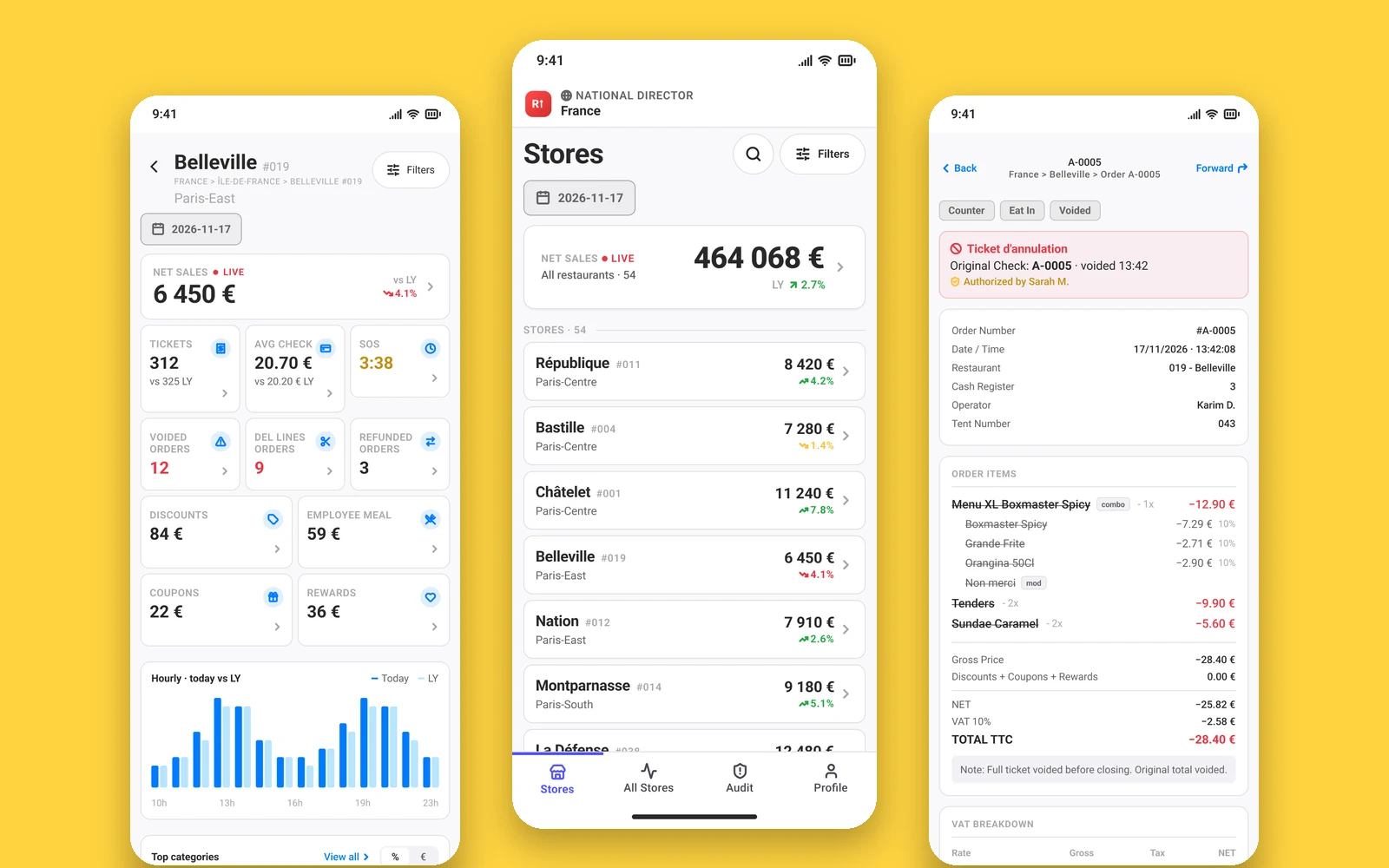
Operations don’t happen at a desk
A restaurant chain is run from the floor, the car and the next store visit. The numbers needed to be there too.
RedUP is Acrelec’s reporting product for multi-store restaurant operators. The mobile app had one job, written into the product itself: real-time operational reporting that observes and compares, and doesn’t decide for the operator.
I designed it mobile-first for KFC’s operation in France, in English and French.
Design, prototype and handoff
- Designed the app end to end: navigation, screens, states and components
- Built the functional prototype in Flutter, with realistic simulated data, using AI-assisted development
- Reviewed it with people from KFC and Acrelec, then adjusted the design from what they did with it
- Wrote the specification for the order detail screen, mapping every field to Acrelec’s order data
- Handed off directly to the development team
One app for four kinds of operator
The role sets the scope, not the user
- Problem
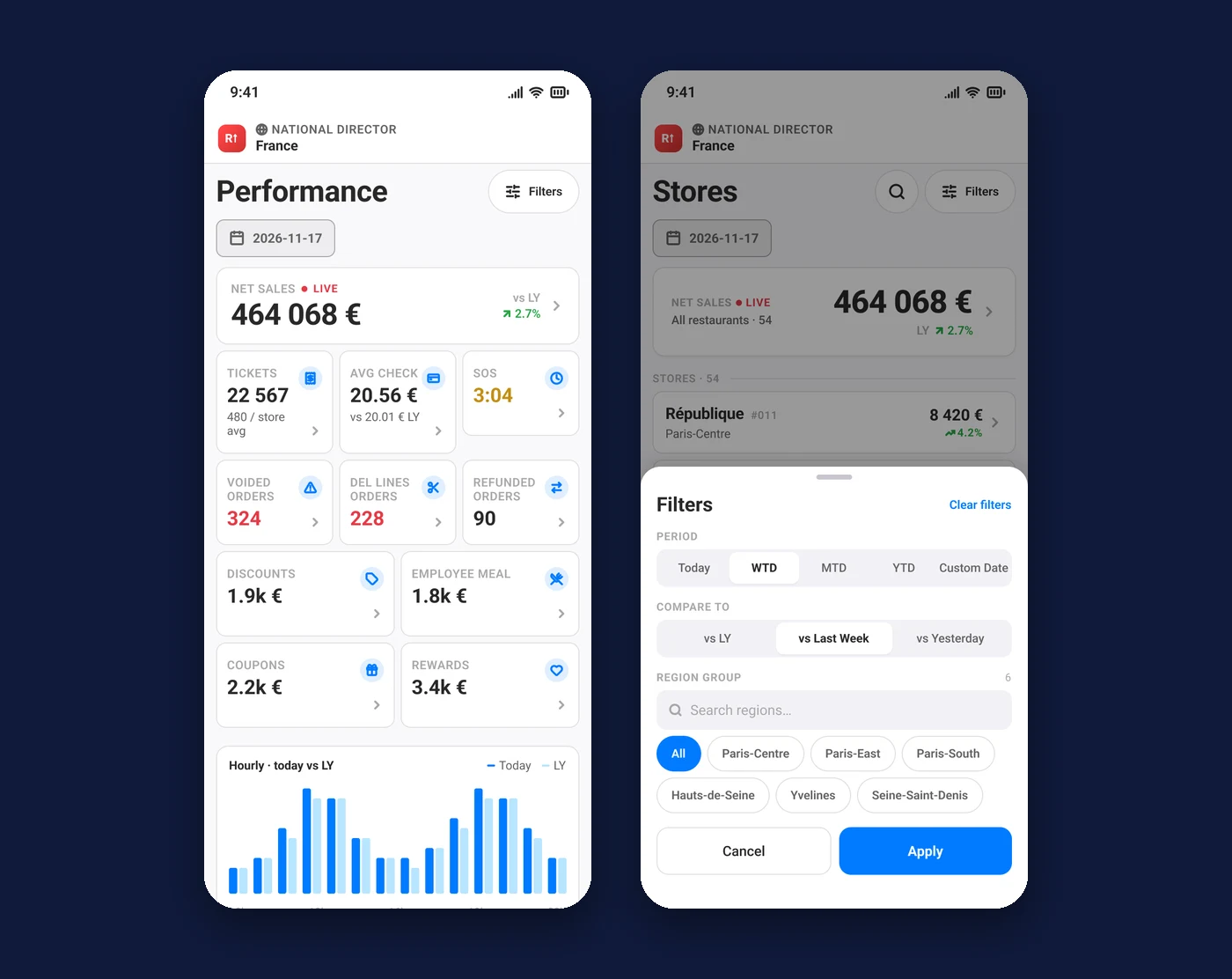
- A store manager, a franchisee, a regional director and a national director ask the same questions about very different amounts of data.
- Change
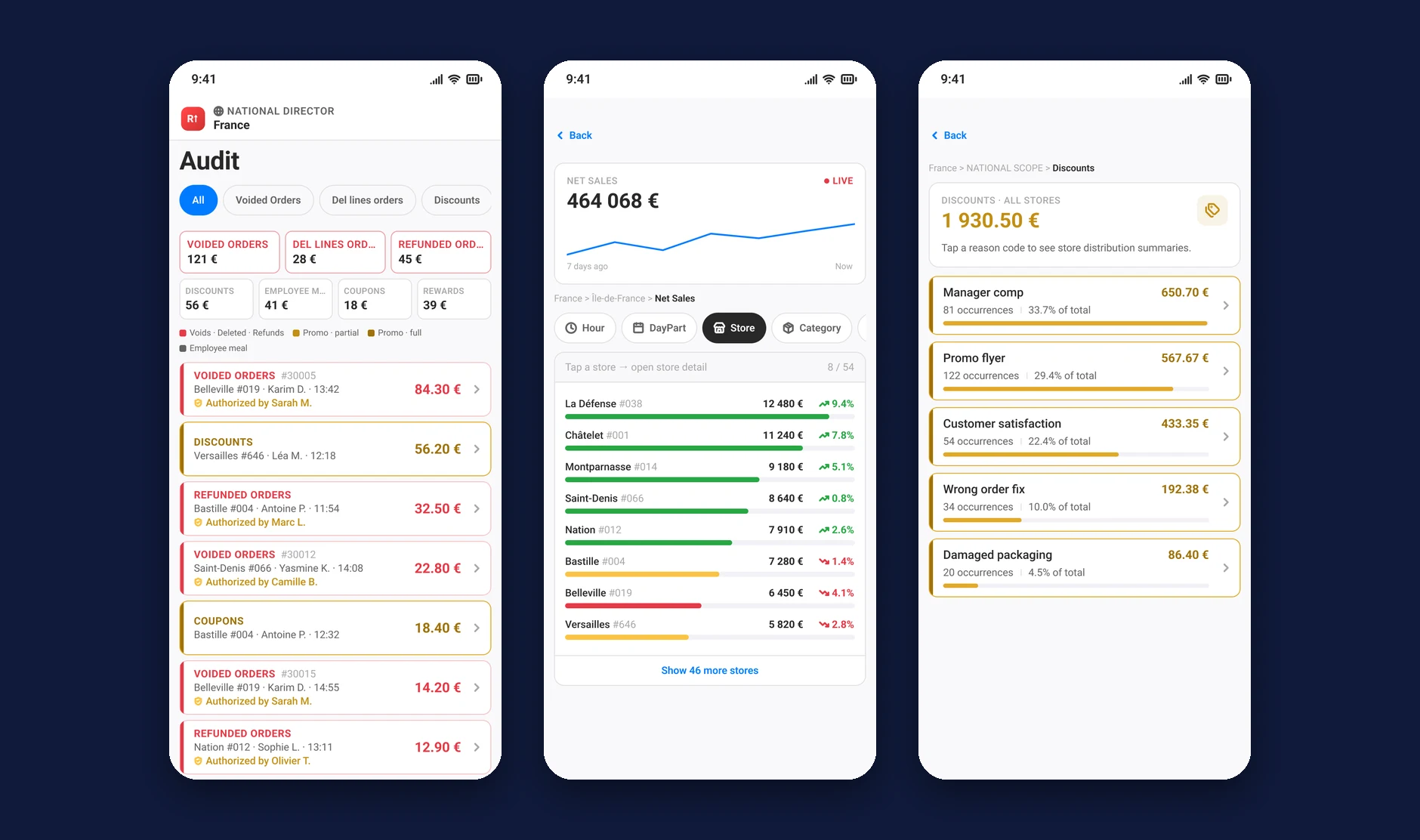
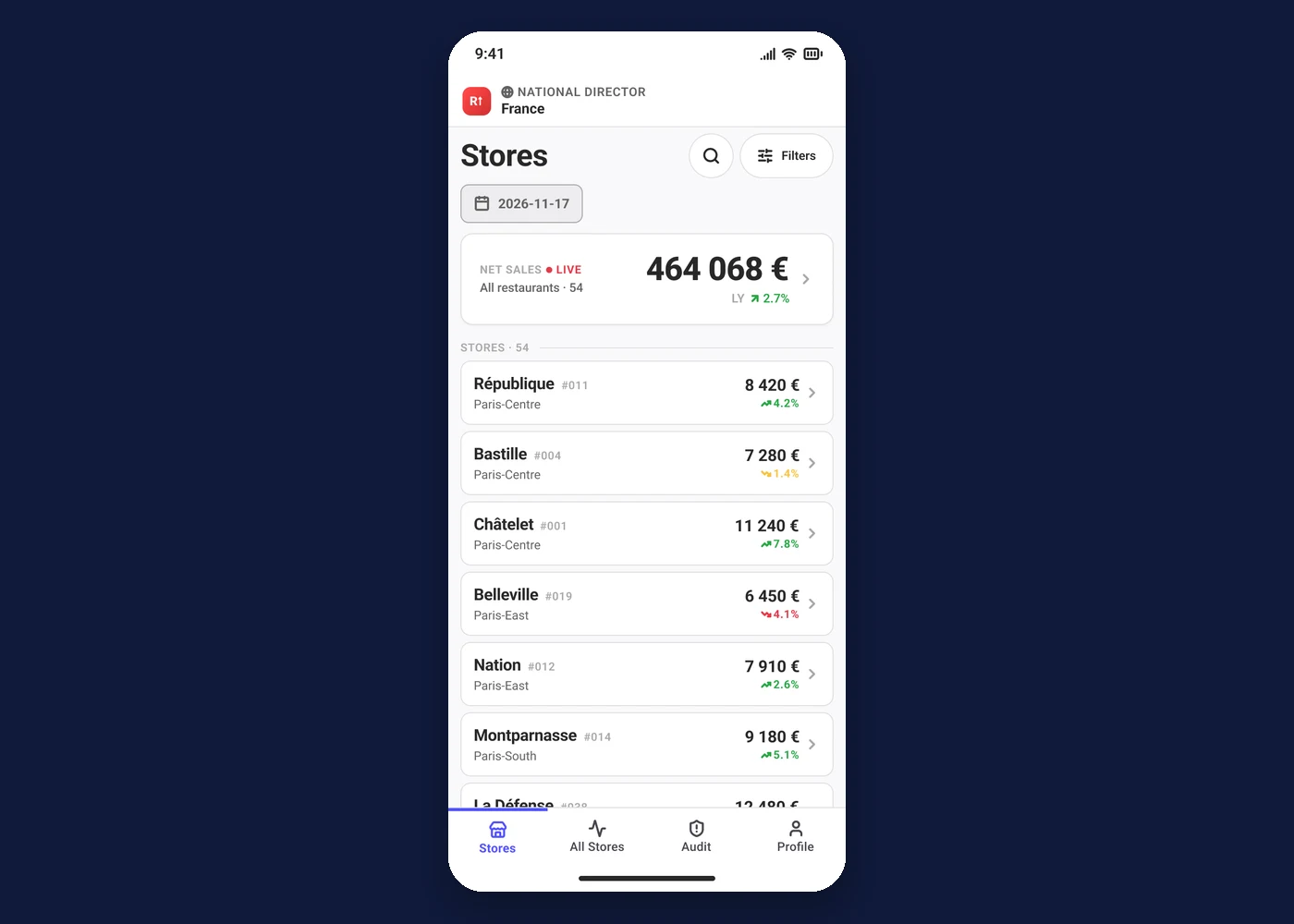
- One app with four scopes: a single store, a group, a region or the country. The header always says whose view it is, and navigation adapts. A manager with one store doesn’t get a ranking.
- Why
- People shouldn’t configure a dashboard before they can read it.

Every number comes with a comparison
- Problem
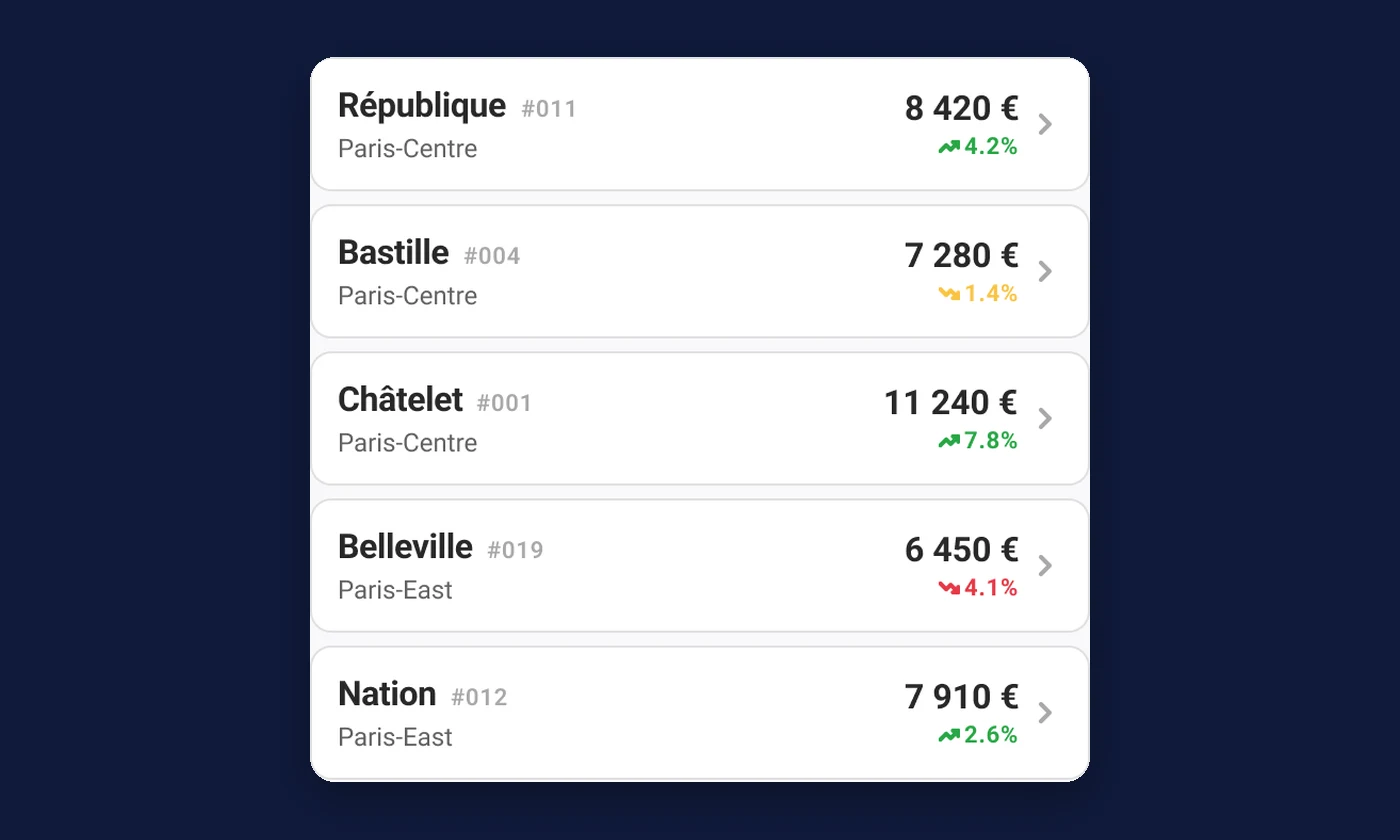
- 8,420 € in sales means nothing by itself.
- Change
- Each value is paired with a comparison the operator picks: last year, last week or yesterday. Color has three levels: green when up, amber for a small drop, red past three points down.
- Why
- Amber separates “keep an eye on it” from “act now”, which a two-color scale can’t do.
From the country to one receipt
- Problem
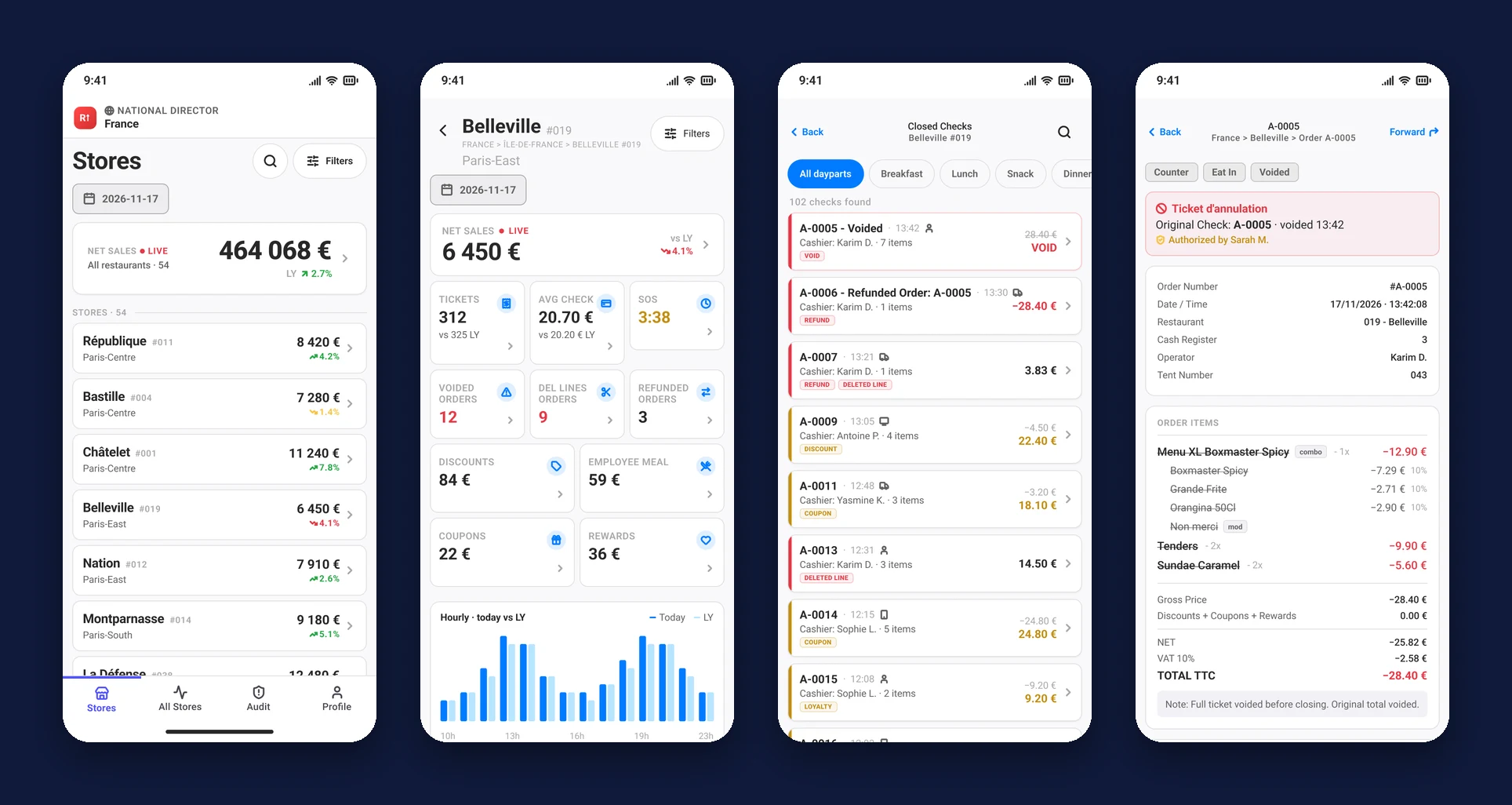
- When a number looks wrong, the operator needs to find the cause, not just see the total.
- Change
- Every level opens the next: network, store, indicator, list of checks, a single check. The audit view lists voids, deleted lines and refunds, with the cashier and who authorized each one.
- Why
- Trust in a BI tool comes from being able to check where a number came from.
Testing behavior, not screens
I built the prototype as a working Flutter app. Numbers drift while the app is open, lists load as you scroll, filters and role switching work. People from KFC and Acrelec used it on their own phones.
Using it surfaced things static screens wouldn’t have. Metric cards didn’t look tappable, so people missed the detail behind them. I reworked their affordance before handoff.
In production
After the review rounds, the prototype and the spec went straight to the development team. RedUP is in production today.
What I’d bring from it: when the prototype behaves like the product, the handoff is a conversation about details, not about intent.