Ordines
An operations platform for accounting firms that I designed and built with AI agents. It runs in production at a real firm.
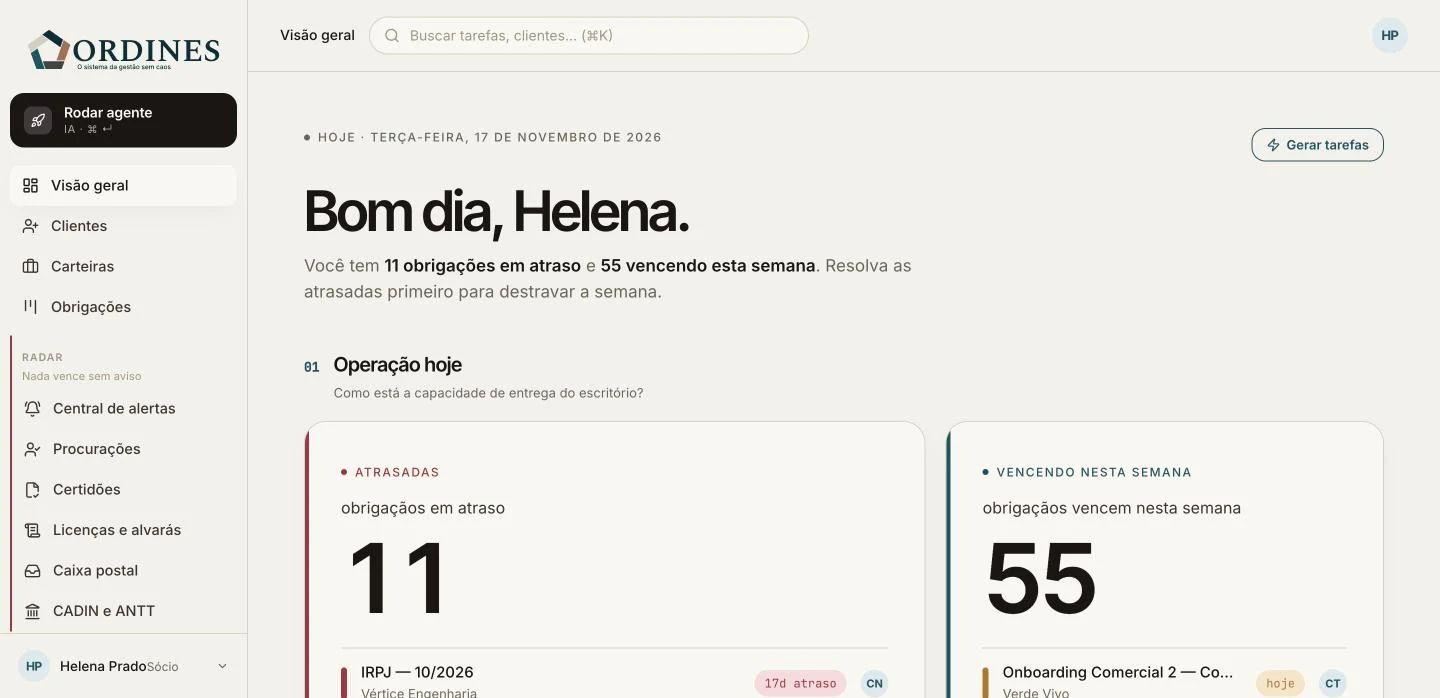
Nothing should expire without warning
A Brazilian accounting firm tracks hundreds of recurring tax obligations, and every client has its own calendar.
Deadlines depend on the tax regime, the business activity code (CNAE), the city and its holidays. Most firms run on a heavy accounting system plus spreadsheets and WhatsApp. A missed date means a fine for the client, and often a lost client for the firm.
Benchmark first, then say no
I mapped two market leaders feature by feature, Omie G-Click and HubStrom, and later a third competitor screen by screen. Two decisions came out of it:
- Don’t copy the complexity. G-Click has about 13 task statuses and its own rule language. A feature only gets in if it adds to the flow and stays invisible to anyone who doesn’t use it.
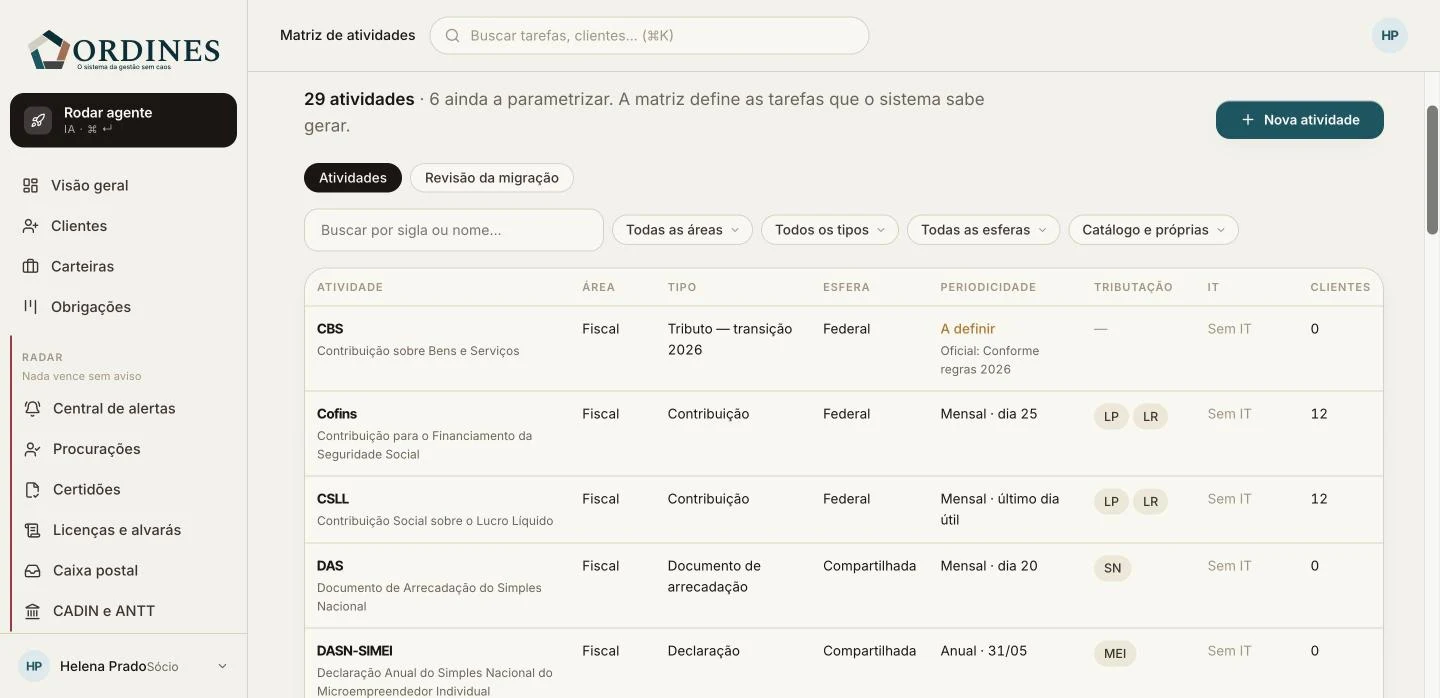
- Protect what nobody else has. Matching activity code and regime to obligations automatically had no equivalent in the products I researched.
Ordines is a control layer on top of the firm’s accounting system. It checks and audits, and it doesn’t try to replace that system.
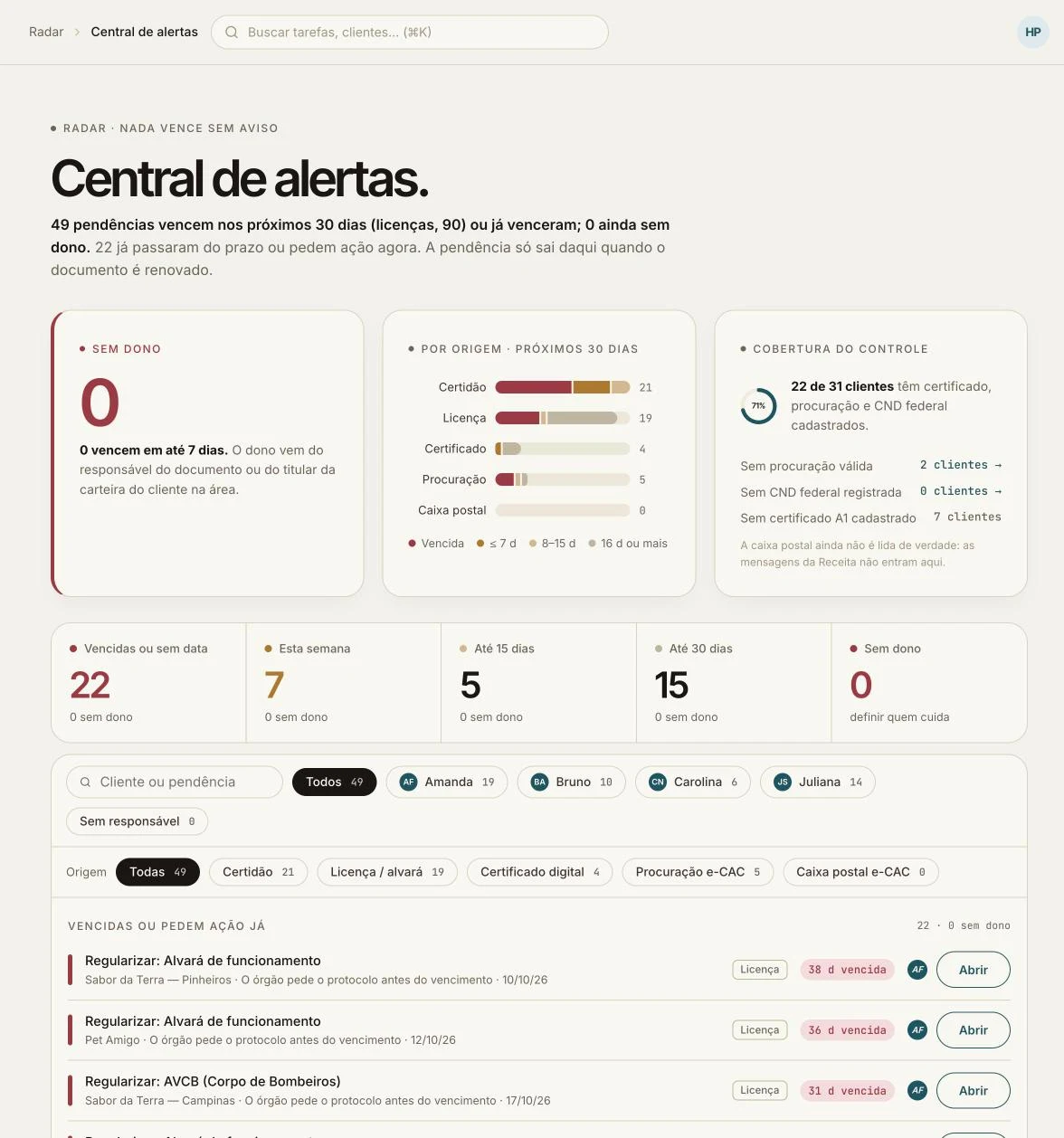
From soft and organic to editorial
My first direction was warm and organic. I moved to an editorial direction for one reason: to make the information stand out. Sober colors and strong type, so deadlines, numbers and the next action are the first thing people see.


Every card tells one story
- Problem
- Dashboards full of charts made people interpret the data instead of acting on it.
- Change
- Each card follows the same structure: a small label, one big number and a sentence that says what to do. “Four obligations are overdue. The oldest has been stuck for a day. Resolve them first.”
- Why
- An accountant opening the tool at 8 a.m. needs the next action, not a chart to read.

The design system (tokens, Inter Tight for numbers, components like SelectPill and DatePickerPill) is written down as rules the coding agents have to follow, such as “never a native select” and “drawers for editing”. That keeps the UI consistent even when an agent writes the code.
Beyond tasks: licenses and the firm’s revenue
Once the task engine worked, the firm asked for two things it was tracking in spreadsheets: business licenses for client chains, and a view of its own client portfolio and fees.
A chain of stores is one view, not ten records
- Problem
- Fire department permits, health licenses and operating permits for every unit of a client chain lived in a spreadsheet with dates nobody owned.
- Change
- Each chain becomes one page: who has to file in the next 90 days, where the risk is by license type, and a grid of units × licenses colored by urgency. The client gets access too, so they can upload the renewed document.
- Why
- The question is never “when does this license expire?” but “who acts, and what is late?”

Charts that say what they mean
- Problem
- The partners’ fee spreadsheet had every number and no conclusions.
- Change
- Every chart opens with one sentence that reads it, like “a Lucro Real client pays on average 5.4× a Simples client”, plus insight cards above the charts and a table view under each one. Fee values are visible only to partners.
- Why
- Partners decide pricing and priorities. They need the conclusion, and the data to check it.

Built for the phone first
Ordines was designed for the phone from the start, not adapted to it afterwards.
It installs from the browser to the home screen and opens full screen, without the browser around it. Navigation moves to a bar at the bottom, and dense screens like the portfolio panel reflow to fit.
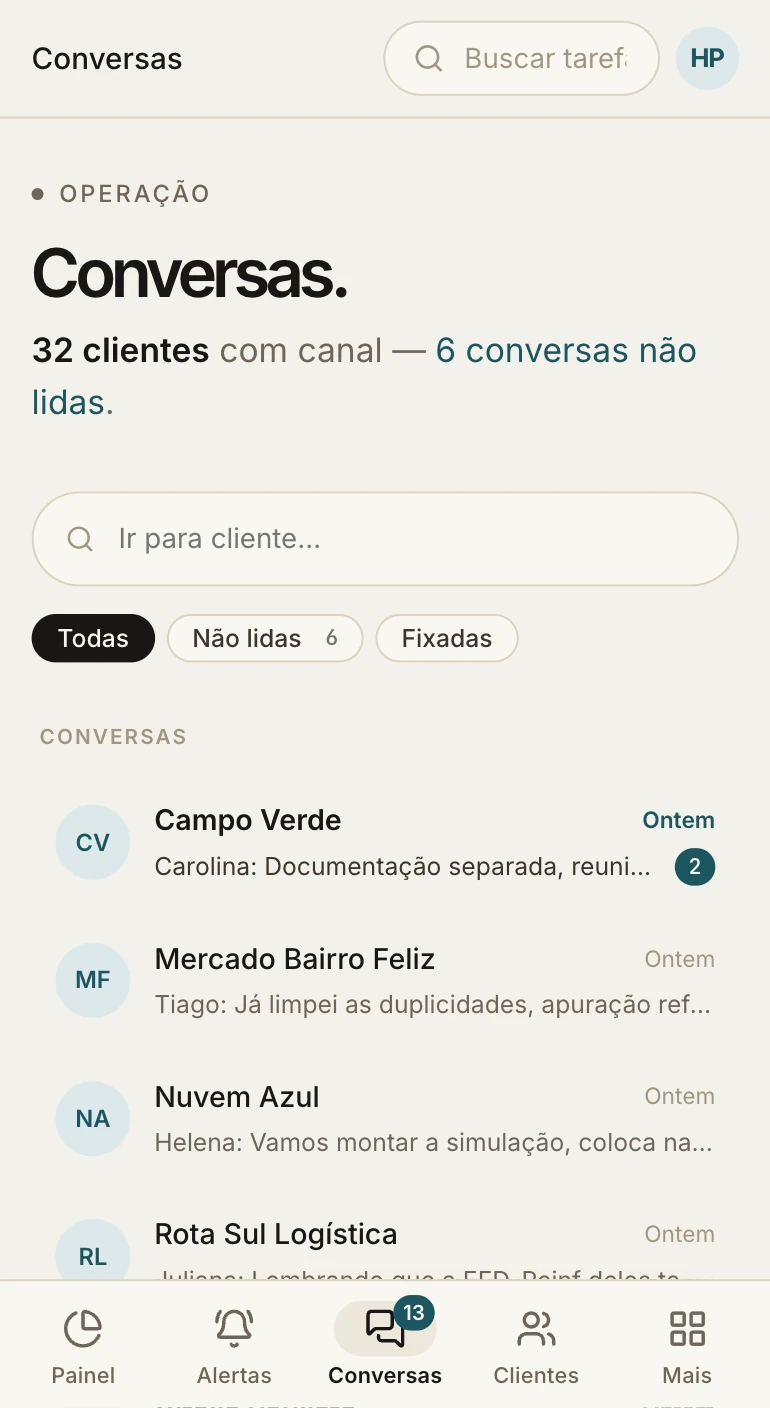
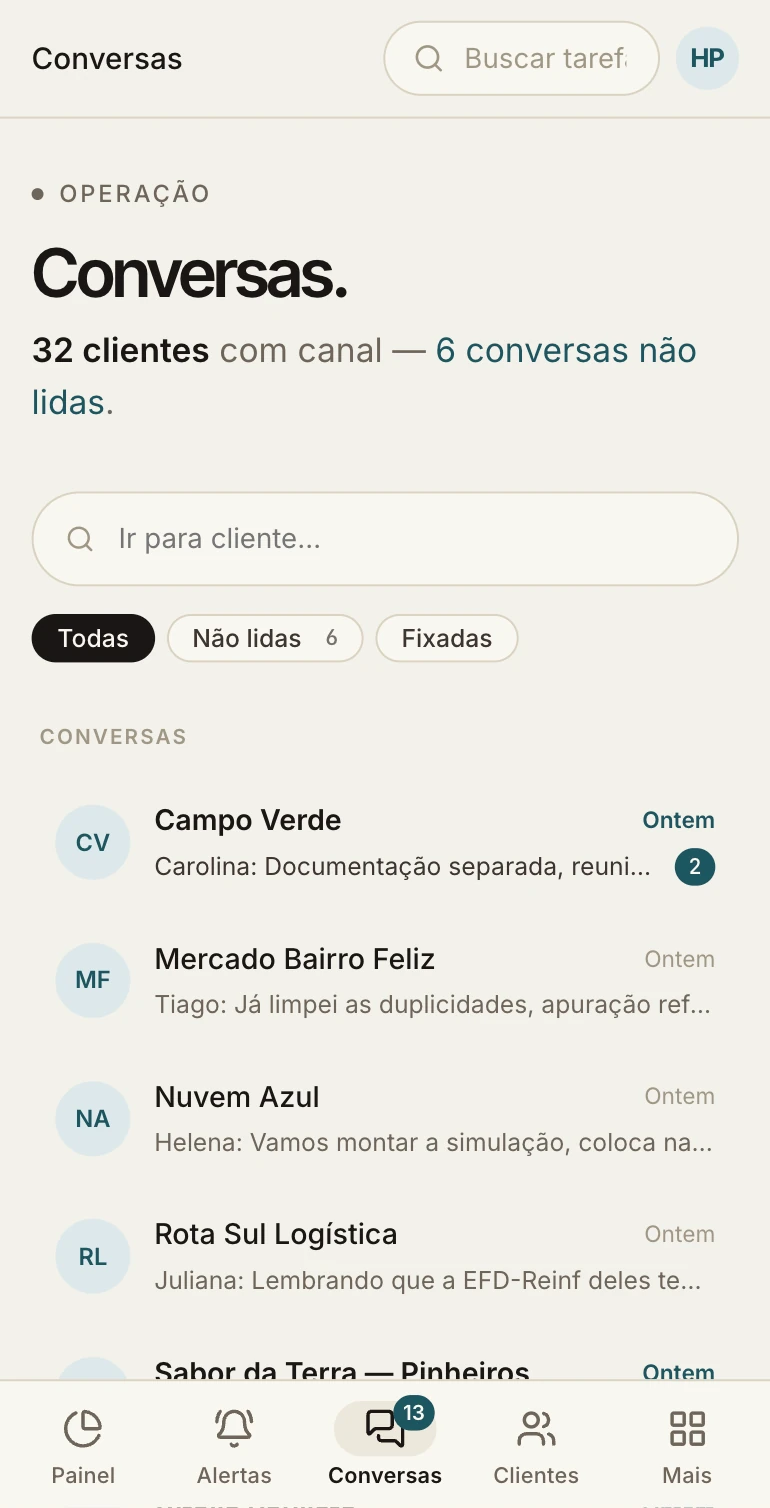
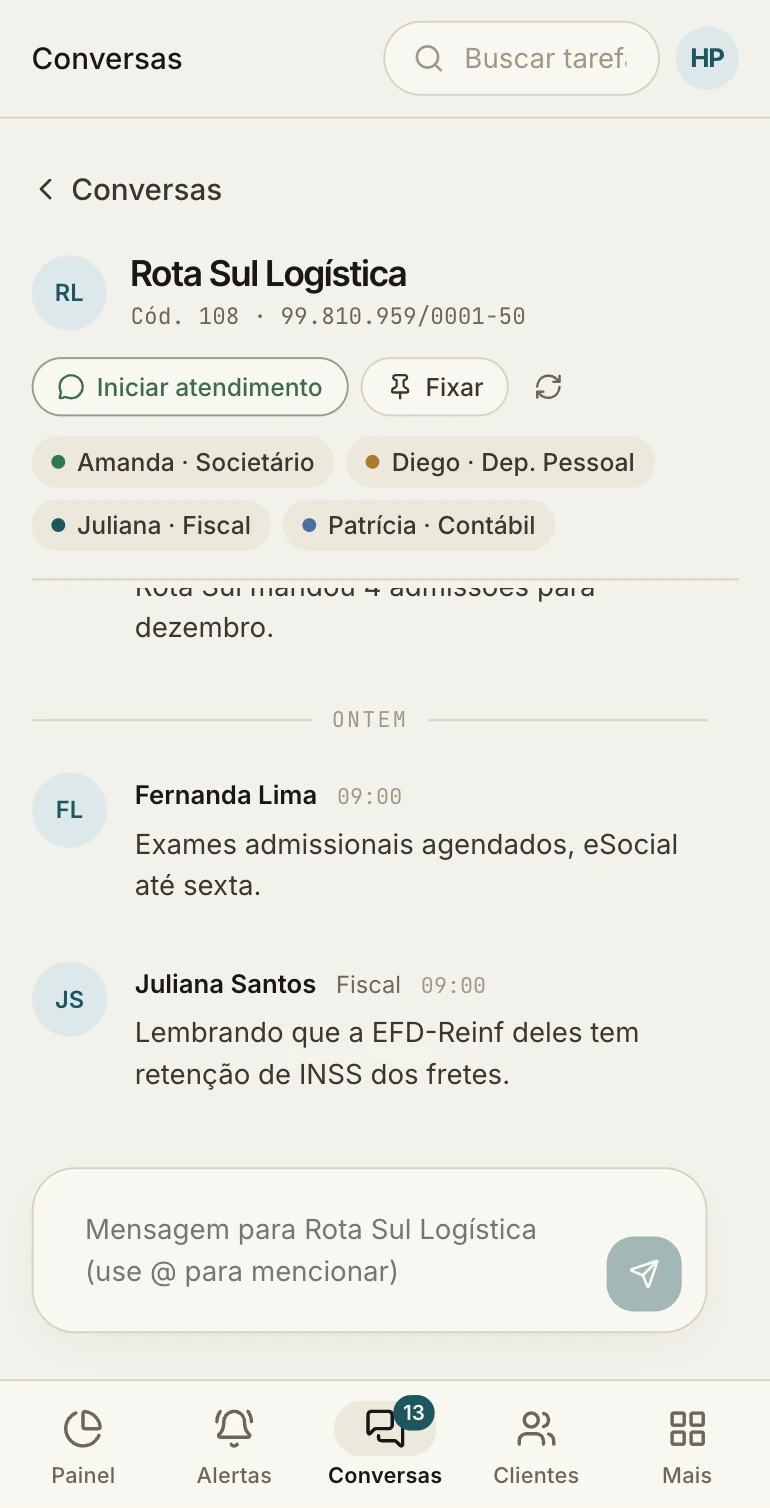


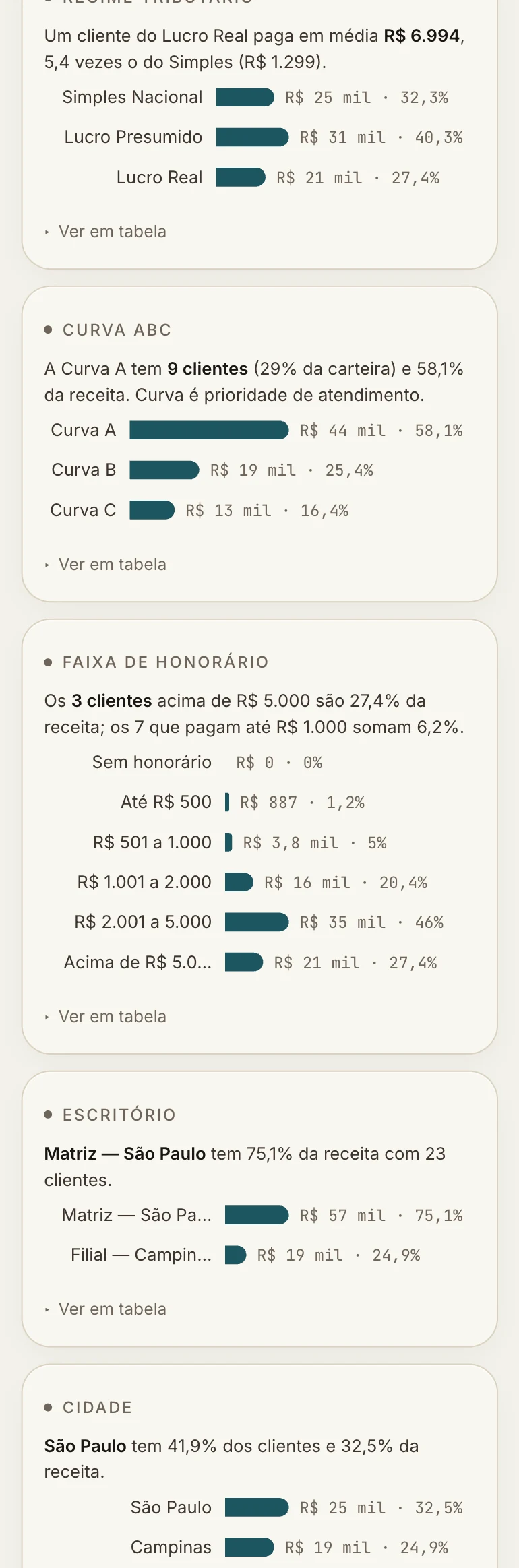

- 01It opens in the phone’s browser
- 02One tap adds it to the home screen
- 03From there it opens full screen, like an app
- 04Conversations, client by client
- 05The portfolio panel, for partners only
Design for actions you can’t undo
Automation starts switched off
- Problem
- Ordines queries government services with the client’s digital certificate and creates tasks automatically. One wrong switch can create hundreds of tasks or run billable queries.
- Change
- Every engine starts off, per firm and per client. Turning on the task engine for an area requires 100% coverage, a preview from the last 48 hours and typing the area’s name. Turning it off is instant and keeps existing tasks.
- Why
- In a business built on trust, one extra click costs far less than one wrong automatic action.
Processes drawn, not written
- Problem
- Each firm’s know-how lived in people’s heads and in long text instructions. Every analyst ran payroll a slightly different way.
- Change
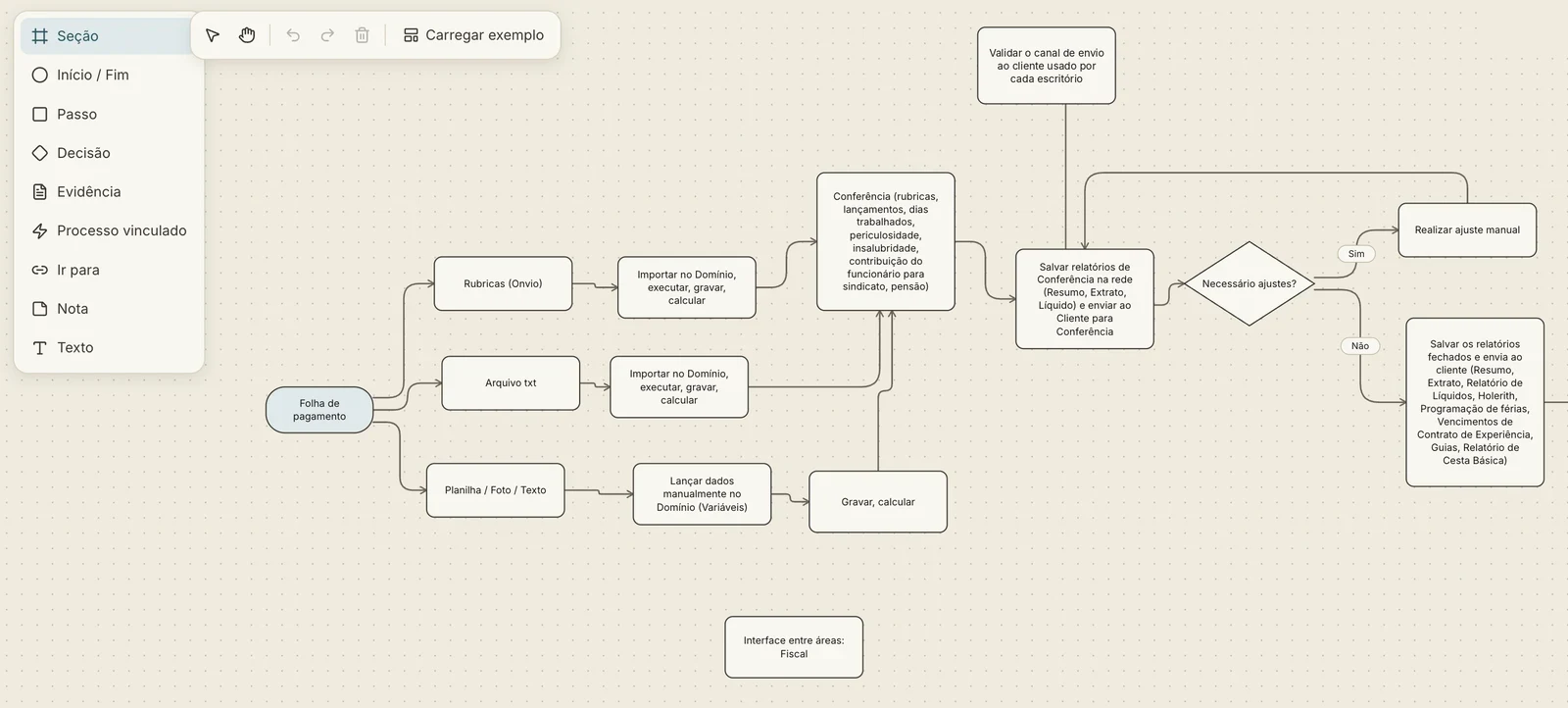
- A custom SVG canvas to draw work instructions with steps, decisions, evidence, notes and links to other processes. Once published, each generated task keeps a frozen copy, so editing a process never changes work already in progress.
- Why
- A drawing is the language the team already used on whiteboards, and it turns into a task checklist automatically.
How I build with agents
Claude Code implements, Codex reviews, and I decide anything that can’t be undone.
The agents work from shared context: a CLAUDE.md that acts as the source of truth, separate frontend and backend rules, a spec per feature and a dated decision log. When something breaks, the lesson goes into that context. After a cookie change broke login for a few minutes, every auth change now requires a Safari test and a check against production before release.
In production, and still growing
Ordines has run in production at a real accounting firm since September 2026, with tasks and the Kanban board, client portfolios and fees, licenses and documents with expiry dates, and integrations with Brazil’s federal and state tax services.
What it shows: with AI in the loop, a designer can take a product from benchmark to production, as long as the judgment stays human.