RocketMan
New customers were paying for QuickBooks and never starting. In five days we prototyped and tested a simpler first week.
Paying, but not using
70% of QuickBooks Brazil’s churn came from the two smallest tax brackets, ME and MEI.
Earlier research and customer feedback told the same story from the inside. These owners wanted a simple view of money coming in and going out. They found a product built for accountants.
“I’ve been paying for QuickBooks for 6 months without using it. I found the platform too complex and gave up.”Small business owner, Brazil
“Basically I want to see my inputs and outputs to have minimal financial control of my company.”Small business owner, Brazil
I worked on every stage of the week: reviewing the research, framing the problem and hypothesis, designing the prototype, running the customer sessions and synthesizing what we learned.
Replace the spreadsheet, not the accountant
If we give these customers a simple setup and only the features they use day to day, they’ll move their finances out of Excel and into QuickBooks.
Signal: active use in the first 7 days. Ambition: 20% less churn in the ME and MEI segment. That was the target we set, not a measured result.
Show the value before asking for data
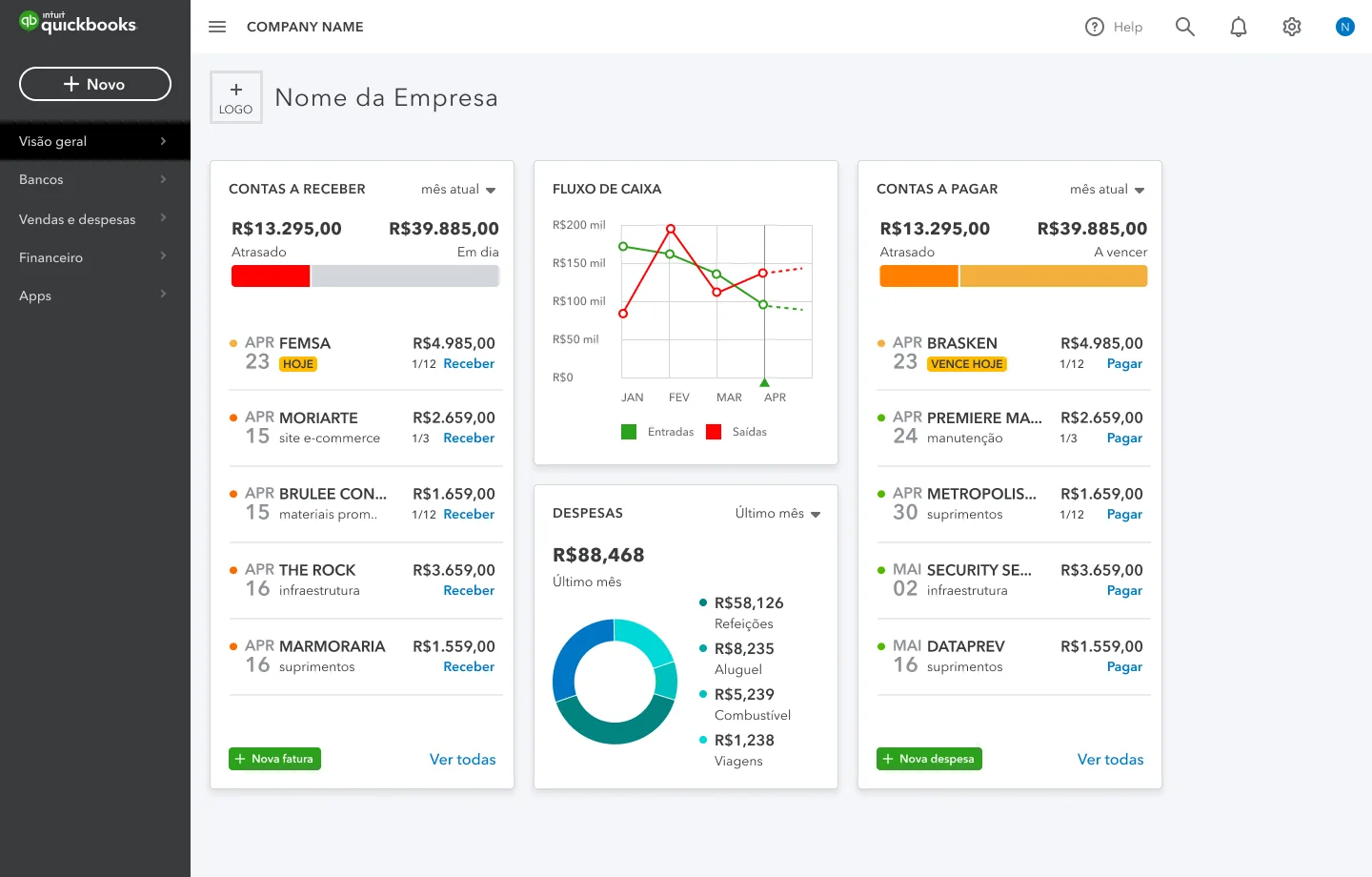
Design the first screen around cash flow
- Problem
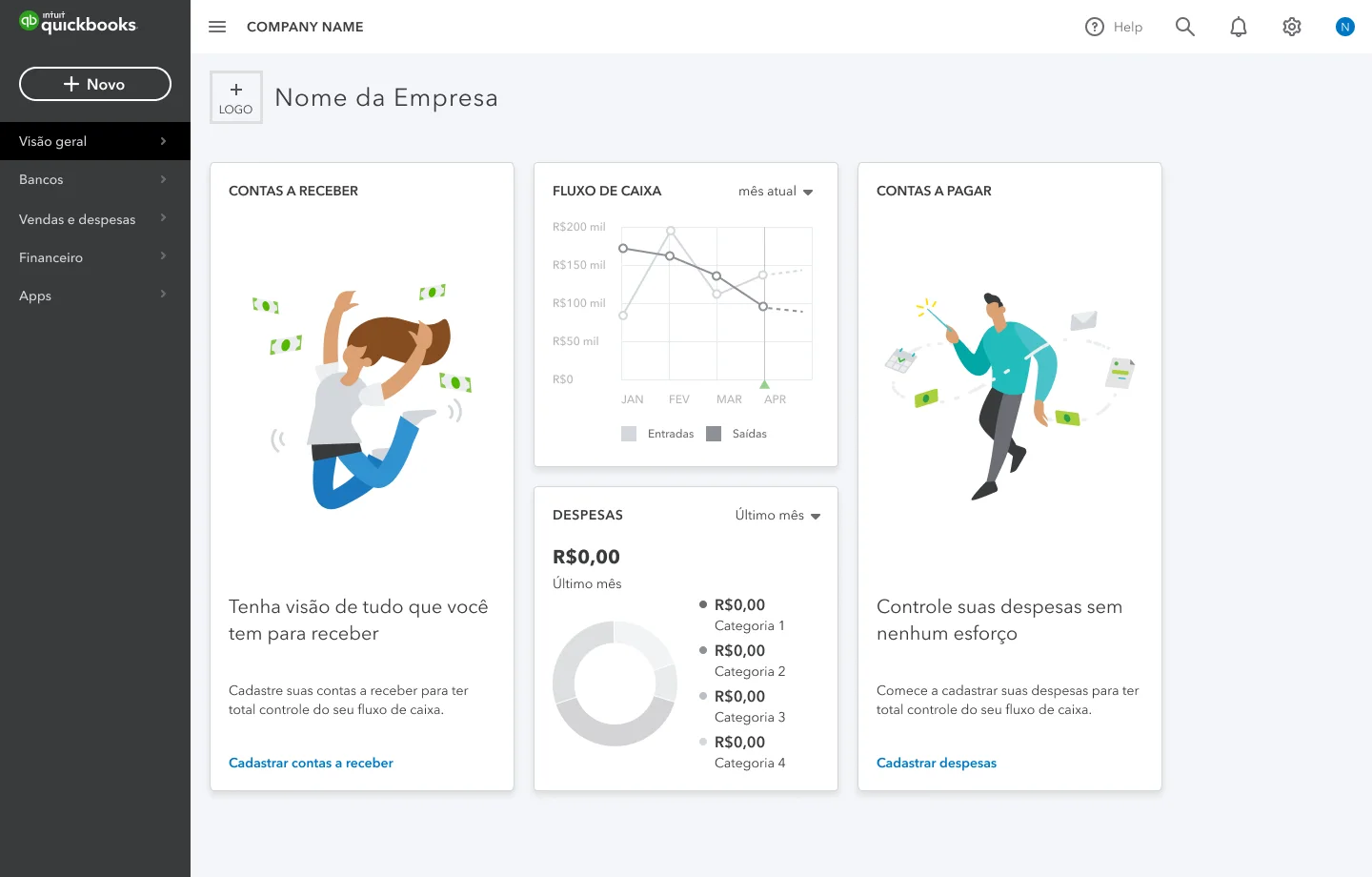
- A new account opens empty. Before it shows anything useful, the product looks like work.
- Change
- Three cards in the order owners think: money to receive, cash flow, money to pay. Each empty card explains itself in one line, with one action to fill it.
- Why
- This segment thinks in money in and money out, not in accounting terms like ledgers or reconciliation.
Moderated sessions, all week
We tested the prototype in moderated sessions with ME owners who had one or two employees, ran their finances themselves and had low financial literacy. That was exactly the profile behind the churn number.
“This is much simpler than my Excel!”Participant, day 2
“For sure I would replace my spreadsheet.”Participant, day 2
Positive reactions were the easy part. The useful part was what went wrong.
What changed the next version
- Cash flow is the job.Most participants wanted money in and money out in one view they could trust.
- Sample data explains value, and confuses.Some people didn’t realize the numbers were illustrative. Next version: a short intro before the tour.
- Jargon blocks people.Options needed a plain explanation, not just the accounting term.
- Bank integration is a deal-breaker.Some had left other tools because their bank wasn’t connected.
- Trust leads to depth.Once the overview made sense, people asked to filter by project or cost center.
The team estimated the new flow could cut weekly financial admin from about 4 hours in Excel to 15 minutes.
A clear direction, not a launch
Every participant said they’d consider replacing their spreadsheet. Engineering flagged a significant build effort, so the proposed next steps were a roadmap, another test round in Brazil and other emerging markets, and a joint estimate with the development team. RocketMan didn’t ship during my time at Intuit.
What I took from it: in a subscription business, the first week decides whether the customer stays.